
Temple
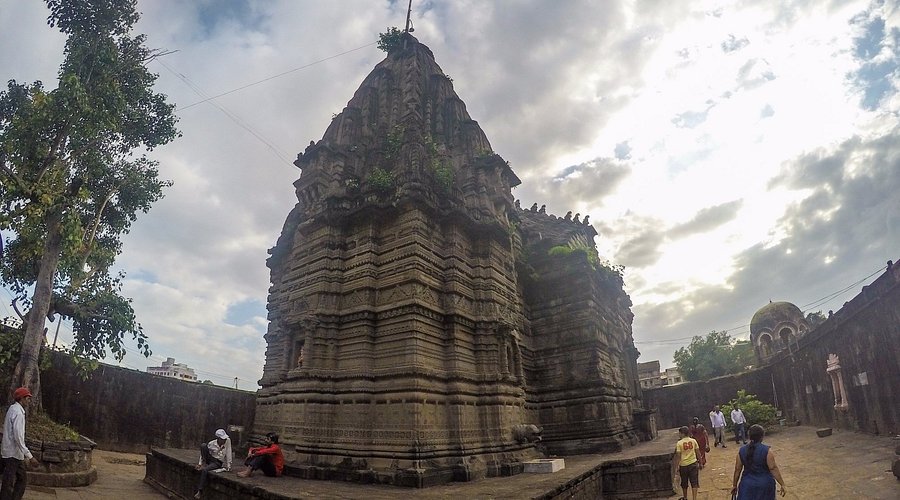
Naroshankar Temple
Dedicated primarily to Lord Shiva, the temple holds immense importance for devotees, especially during the festival of Maha Shivaratri, when thousands gather for prayers and rituals. Its riverside setting near the sacred ghats of Panchavati adds to its pr
Temples and ghats
• Built By: Sardar Naroshankar Rajebahaddur (a Maratha commander/noble under the Peshwas) in 1747 AD.
• Architecture: Built in the distinctive "Maya" style (with influences of traditional Hemadpanthi and Maratha temple architecture).
• Exterior Carvings: The temple is raised on a platform featuring intricate outer stone carvings, including decorative lacework and rows of peacocks holding bead garlands
• Statues & Umbrellas: The four directions feature statues of saints in Padmasana (lotus position). Its four corners traditionally held ornate open-air dome umbrellas called "Meghadambari" or "Barasati" (three remain today, while one was swept away in Godavari floods).
• Fortification: An 11-foot-high stone wall encircles the complex. The Famous Naroshankar Ghanta (Bell)
• Origin: At the front/riverside entrance sits a massive bronze bell known as the Naroshankar Ghanta. It was installed as a victory trophy/memorial following the Maratha victory over the Portuguese at Vasai Fort in 1739 under Chimaji Appa (brother of Peshwa Bajirao I), in which Naroshankar played a notable role.
• Specifications: It measures about 6 feet in diameter and has the year 1921 engraved on it. Local tradition says the ringing sound of the bell could historically carry up to 5 miles (5 kilometers)
How to reach
Naroshankar Temple ,Panchavati, Nashik, Maharashtra 422003, India
Directions
Plan your visit
Nashik Kumbh Mela snan dates & Shahi Snan timings
Safety, emergency help and lost & found
Where to stay for the Nashik Kumbh Mela: tents, dharamshalas and hotels
How to reach Nashik for the Kumbh Mela: train, bus, road and air
Holy dip, Asthi Visarjan and puja at Ramkund and Trimbakeshwar
Two-day Nashik and Trimbakeshwar itinerary for Kumbh pilgrims
What is the Simhastha Kumbh Mela in Nashik and Trimbakeshwar?
All pilgrim guides